Ingredient education
The Azelaic Acid Guide
Azelaic acid is a dicarboxylic acid found naturally in grains like barley and wheat, and one of the most researched ingredients in skincare. In cosmetic formulas it visibly evens tone and softens the look of redness, post-blemish marks, and bumpy texture, without the drama harsher actives bring.
What azelaic acid does for skin
Four jobs, done gradually and comfortably with consistent use.
Visible redness
Softens the look of flushing and blotchiness that redness-prone skin knows too well.
Post-blemish marks
Fades the look of the dark spots (PIH) that hang around long after a breakout ends.
Uneven texture
Smooths the look of bumpy, congested-feeling skin over time.
Overall tone
Evens the look of tone so skin reads calmer and more uniform.
10% vs 14% azelaic acid: which strength?
Start at 10%
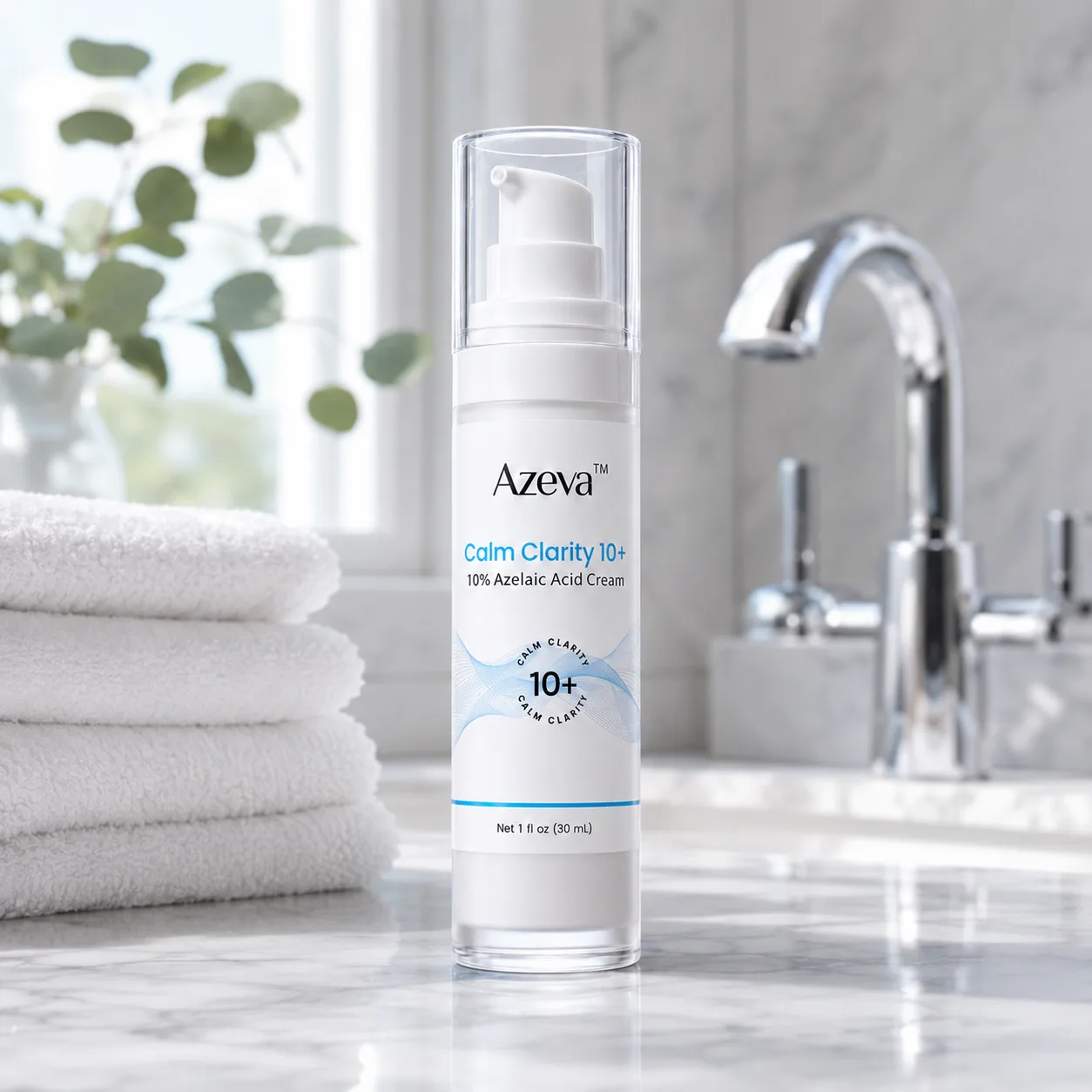
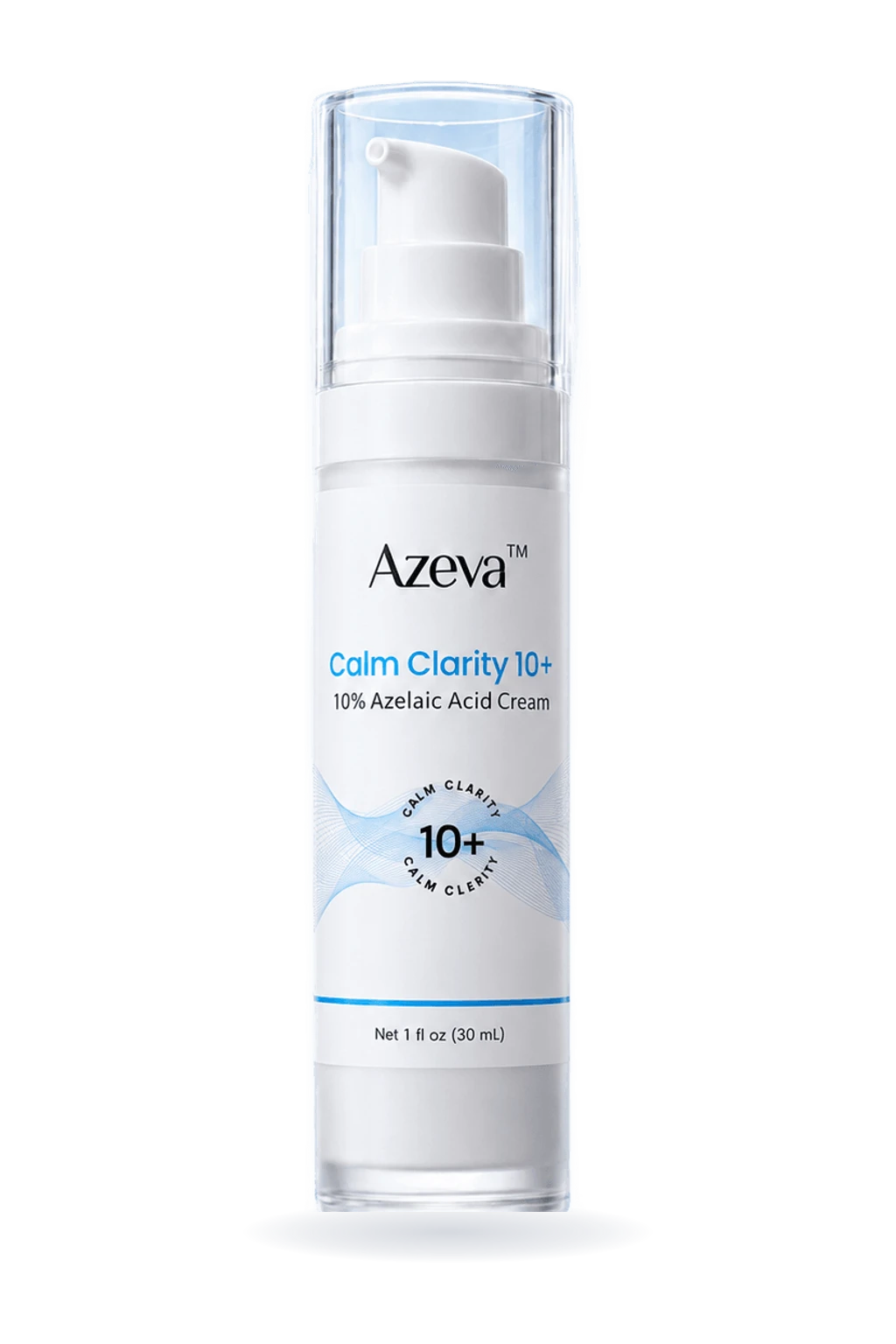
The classic on-ramp. Pick 10% if you are new to azelaic acid, your skin reacts easily, or you simply want the gentler daily version of the ingredient.
Calm Clarity 10+Step up to 14%
The strength most shelves stop short of. Pick 14% when 10% products never did enough for the look of your redness or post-blemish marks, and ease in a few nights a week.
Calm Clarity 14+Azelaic acid cream vs serum
Same ingredient, different feel. Choose the texture your skin will actually enjoy using every day, because consistency is what gets results.

Start here
Calm Clarity 10+
The 10% cream on-ramp for skin that is new to azelaic acid or reacts easily.
$29.00 View

The step up
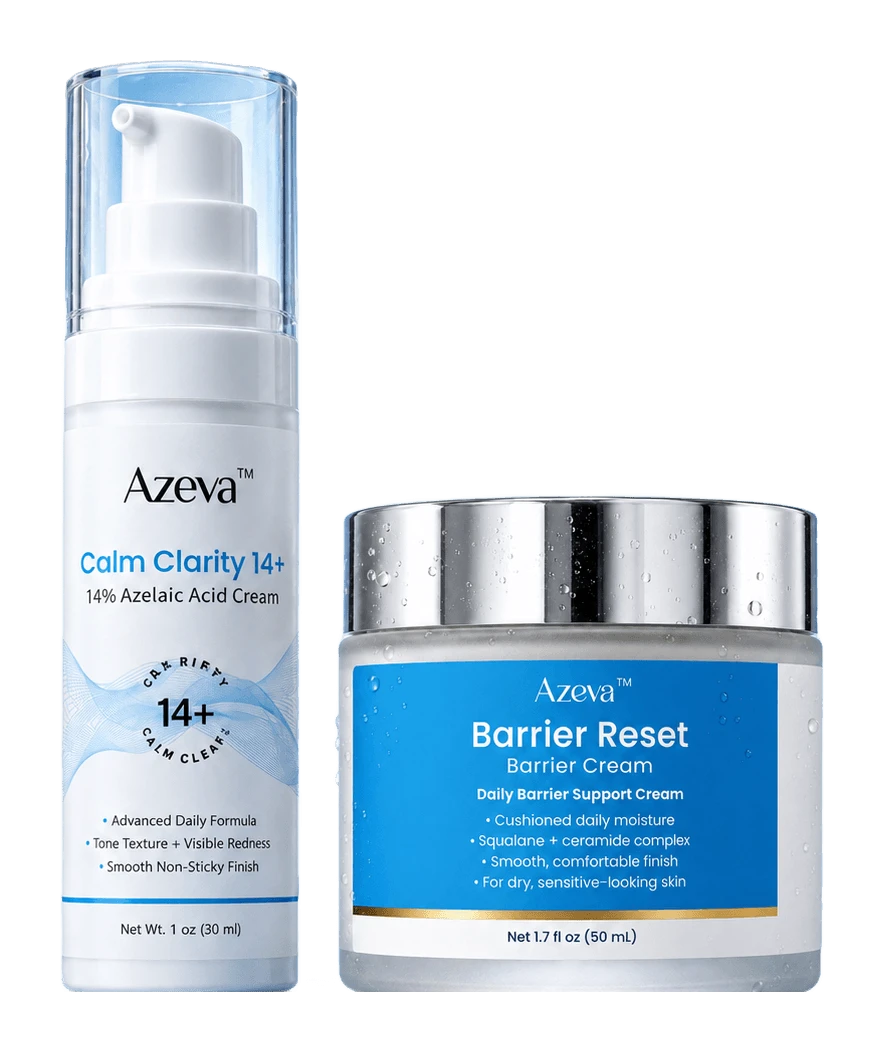
Calm Clarity 14+
Our strongest azelaic cream, for the look of redness and marks that 10% could not budge.
$34.00 View

The serum lane
Calm Clarity Serum 10+
The same 10% strength in a weightless serum that layers under anything.
$28.00 View

The comfort layer
Barrier Reset
Not an azelaic product: the barrier cream that keeps an active routine comfortable.
$32.00 View
The research on azelaic acid
Rosacea, by the numbers
Peer-reviewed clinical trials on azelaic acid, the ingredient.
72.7%
average drop in inflammatory lesions with azelaic acid 15%
58% vs 40%
azelaic acid vs placebo, lesion-count reduction
61%
reached clear, minimal or mild skin (vs 40% on placebo)
These studies examine azelaic acid as an ingredient, at prescription strength. Azeva is a cosmetic that contains azelaic acid. It is not a drug and is not intended to diagnose, treat, cure, or prevent rosacea or any condition. For medical treatment, talk to a dermatologist.
The research on azelaic acid
Dark spots & melasma, by the numbers
Peer-reviewed trials on azelaic acid, the ingredient: a tyrosinase inhibitor studied for melasma and post-acne marks (PIH).
73% of users
saw post-acne marks improve 60%+ with azelaic acid 15%, vs 13% on placebo (12 weeks)
65%
good-to-excellent melasma improvement with azelaic acid 20%, on par with 4% hydroquinone
673 patients
across 6 pooled melasma trials, azelaic acid matched hydroquinone, with no difference in side effects
These studies examine azelaic acid as an ingredient, often at prescription strength. Azeva is a cosmetic that contains azelaic acid. It is not a drug and is not intended to diagnose, treat, cure, or prevent melasma, hyperpigmentation, or any condition. For medical treatment, talk to a dermatologist.
The routine
The 12-week rule
Azelaic acid is steady-use. Judge it over weeks, not a few days.
- Week 1
Start simple
Pick one azelaic step and keep the rest of the routine boring enough to repeat.
- Weeks 4-8
Protect consistency
Hold the line on over-exfoliating, fragrance-heavy swaps, and constant product changes.
- Week 12+
Judge the trend
Look for the direction of change in tone, texture, and visible marks over time.
How to add azelaic acid to your routine
- 1
Cleanse
Start with clean, dry skin. Azelaic acid does not need prep steps or buffering.
- 2
Apply a thin layer
One active step only: your azelaic cream or serum, morning or evening. Ease in a few times a week and build up while skin stays comfortable.
- 3
Moisturize
Follow with a barrier-supporting moisturizer so the routine stays comfortable day after day.
- 4
SPF in the morning
Azelaic acid is not known to add sun sensitivity, but daily sunscreen protects the even tone you are working toward.
Azelaic acid questions, answered
What is azelaic acid?
Azelaic acid is a dicarboxylic acid found naturally in grains like barley, wheat, and rye; skincare versions are made in a lab for purity and stability. It is one of the most researched ingredients in skincare, including decades of clinical study at prescription strengths.
What does azelaic acid do for skin?
In cosmetic formulas, azelaic acid visibly evens skin tone, softens the look of redness and flushing, fades the look of post-blemish marks (PIH), and smooths the look of bumpy, uneven texture. It works gradually with consistent use.
Should I start with 10% or 14%?
Start at 10% if you are new to azelaic acid or your skin reacts easily; it is the classic on-ramp strength. Choose 14% if 10% products never did enough for the look of your redness or post-blemish marks. The strengths are a ladder, not a rivalry.
Azelaic acid cream or serum: which format?
Pick by texture, not strength. A cream cushions and comforts, which suits drier or sensitive-leaning skin. A serum is weightless and layers cleanly under other products, which suits oily or combination skin and humid weather. At the same percentage they are the same active step.
How often should I use azelaic acid?
Ease in: start once daily or a few evenings a week, and build up to twice daily if your skin stays comfortable. Apply a thin layer to clean, dry skin, then follow with moisturizer.
Can I use azelaic acid with niacinamide, vitamin C, or retinol?
Azelaic acid generally sits well beside simple moisturizers, niacinamide, hyaluronic acid, ceramides, and sunscreen. If your routine also includes retinoids, vitamin C, or exfoliating acids, introduce one active at a time and keep the routine simple rather than stacking everything at once.
Does azelaic acid make skin sensitive to the sun?
Azelaic acid is not known to increase sun sensitivity the way exfoliating acids can. Daily sunscreen is still essential, especially when your goal is a more even-looking tone, because unprotected sun exposure works against you.
How long does azelaic acid take to work?
Think in weeks, not days. Most people who love azelaic acid describe gradual change: early comfort and smoothness first, with the look of tone and post-blemish marks improving over eight to twelve weeks of consistent use.
Is azelaic acid good for sensitive, rosacea-prone skin?
Azelaic acid has a reputation as one of the more comfortable actives, which is why it is so popular for redness-prone and sensitive-leaning skin. Fragrance-free formulas, a slow start, and a barrier-supporting moisturizer keep it that way. Patch test anything new.
Do I need a prescription for azelaic acid?
Prescription azelaic acid (15-20%) exists as medication; talk to a dermatologist if you need medical treatment. Azeva products are cosmetics at 10% and 14% for the look of redness, tone, and texture, and need no prescription.
Pick your azelaic acid lane
Azeva is a cosmetic that contains azelaic acid. It is not a drug and is not intended to diagnose, treat, cure, or prevent any condition. Studies cited on this page examine azelaic acid as an ingredient, including at prescription strengths. For medical treatment, talk to a dermatologist.